Why Death Talk Doesn’t Build Legacy Pipelines
I have been sitting on this blog topic for nearly a year. You know, we’re often reluctant to be the voice of dissent in the non-profit sector to avoid tension or due to fear of being branded a “shit disturber”. Here’s the thing, I believe it’s important we use our critical thinking when reading articles written by colleagues in the sector. I also believe we must challenge views because it can only help us apply mindful and evidence-based approaches to fundraising. So this is that kind of post 😏
In July 2025, AFP published a piece written by William McConnell, CFRE who suggested that legacy professionals should embrace the “D word”, arguing that saying “death” will openly strengthen our legacy programmes. It’s a passionate argument built on the concept of three deaths and the human desire for immortality. It’s also rooted in assumptions that don’t hold up to scrutiny: that all donors share a particular worldview about mortality and meaning-making, and that emotional resonance equals strategic effectiveness.
The evidence suggests otherwise.
The Three Deaths Problem
Let’s start with the metaphor itself. The article invokes the Hispanic cultural concept of three deaths: physical death, burial, and the moment when no one remembers you. It’s a beautiful framework, I’ve mentioned it in presentations. But there’s a problem with how it’s deployed.
The “three deaths” concept is specifically rooted in Mexican tradition, particularly el Día de los Muertos (day of the dead), not broadly “Hispanic culture.” That distinction matters. There are 33 countries in Latin America. Collapsing diverse cultures into a single narrative, especially to justify a universal messaging strategy, is reductive and problematic. I’m from Argentina, there is no such celebration, nor in the rest of South America. More importantly for fundraisers, it misses what the research actually tells us about donor motivation.
The article uses this metaphor to argue that donors are primarily motivated by existential fear: the terror of being forgotten. But behavioural research on donor motivation tells a very different story.
What Donors Actually Care About
Charitable bequest decisions operate on a fundamentally different cognitive basis than current giving. In a groundbreaking fMRI study, James and O’Boyle (2014) found that legacy decision-making activated the precuneus and lingual gyrus of the brain, regions associated with autobiographical memory and third-person perspective, more than either current charitable giving or volunteering decisions.
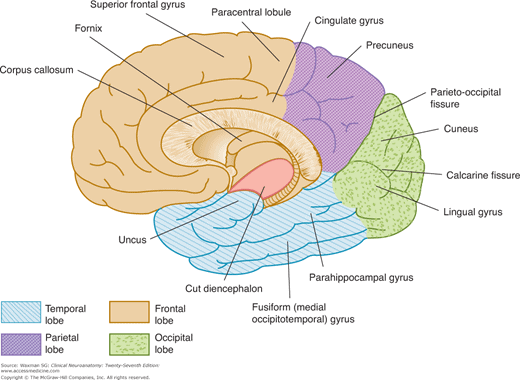
What this research does is reframe what’s actually happening when someone contemplates a gift in a will. This is not about conquest of mortality. Instead, the authors propose that successful legacy fundraising should emphasize donors’ autobiographical connections with the charity, not their fear of being forgotten. Donors make legacy decisions by mentally “reliving” personal episodes and projecting themselves across time. They’re asking: Will this gift reflect who I am and what I value? rather than Will this make me immortal?
Routley‘s (2011) qualitative interviews with bequest donors confirm this. When discussing which charities they had chosen to remember, there was a clear link with the life narratives of many respondents. One 89-year-old donor explained his bequest selections like this:
“There’s the Youth Hostel Association, first of all… it’s where my wife and I met… Then there’s the Ramblers’ Association. We’ve walked a lot with the local group… Then Help the Aged, I’ve got to help the aged, I am one” (Routley, 2011, cited in James & O’Boyle, 2014, p. 365).
This is not immortality-seeking. This is identity-expressing.
The Problem with Mentioning Death Explicitly
Here’s where things get concrete: James (2016) found that respondents were significantly less likely to express interest in “make a gift to charity in my last will and testament that will take effect at my death,” than in simply “make a gift to charity in my last will and testament.”
The gratuitous reference to the respondent’s own death actually suppressed interest.
More broadly, James and Routley (2016) found that living donor stories consistently outperformed otherwise identical deceased donor stories at increasing interest in making a charitable bequest gift. The effect was statistically significant across all tested scenarios. This aligns with terror management theory: personal mortality contemplation may generate a more intense desire to distance oneself from those associated with death or bodily infirmity. Showing donors examples of living people who have planned a gift in a will is more effective than showing deceased donors who have completed them.
The implication is straightforward: de-emphasize death in your messaging. Emphasize legacy.
The Unspoken Worldview Problem
The AFP article is written by a Presbyterian Foundation Director with deep roots in Christian tradition. His framework assumes that donors are grappling with spiritual questions about the afterlife and seeking meaning through transcendence. That’s a valid personal or organization-specific perspective but it’s not universal.
Consider the diversity of your actual donor base.
Donors who are non-religious or secular may not relate to immortality narratives tied to meaning-making, purpose beyond death, or even the concept of ‘going to heaven’! Donors from different cultural or faith traditions may have entirely different relationships to mortality and legacy. Donors of different ages, backgrounds, and life circumstances may simply want to support a cause they care about now without contemplating their own mortality.
By framing legacy giving through a death-and-meaning lens, the article subtly excludes donors who don’t fit that framework. That’s the opposite of accessibility. And accessibility isn’t a nice-to-have in legacy fundraising; it’s essential if you want to build a sustainable, diverse donor base.
What Actually Increases Legacy Gifts
Here’s where evidence reshapes strategy entirely.
Avoid Small-Gift Anchors
James and Routley (2025) conducted the first randomized controlled experiment examining the effects of small gift and small estate percentage references in legacy gift marketing. The findings are stark.
Referencing a small estate percentage example, such as 1% or 2% of the estate, significantly decreased the intended bequest gift size while also weakly decreasing the likelihood of making a gift in will. This is the opposite of what fundraisers might expect based on current giving research, where small-gift examples increase participation.
Why? Because legacy gifts are one-time events. There’s no chance to offset a smaller initial gift with subsequent gifts. The financial dominance of large estate gifts means this matters enormously. While most charitable estates transferred less than $100,000 to charity, these constituted only 1.1% of total charitable bequest dollars transferred. Conversely, those leaving 90% or more of their wealth to charity accounted for more than 55% of total charitable bequest dollars (note this research was conducted among US legacy donors).
Marketing messages that reduce gift size have outsized negative impact on legacy fundraising revenue, so, you know: stop using 1% anchors!
Lead with Autobiography, Not Mortality
As mentioned, James and O’Boyle (2014) found that donors conceptualize legacies as autobiographical, meaning a way to extend their identity and values into the future. Encourage donors to articulate why they care about your cause. What in their life journey connects them to your mission? This is far more powerful than any discussion of death or legacy immortality.
Emphasize Living Donor Stories
A field experiment found that adding a single phrase containing a social norm statement (“many of our customers like to leave money to charity in their will. Are there any causes you’re passionate about?“) during the will-making process more than tripled the share of people including charity in their will documents while also doubling the average gift size among donors. Prompt your allied professionals to have these types of conversations.
Also ensure your donor stories feature living legacy donors, not deceased ones. James and Routley (2016) found that living donor stories were consistently more effective. This matters psychologically and practically.
Respect Donor Diversity
I know that in legacy giving many are reluctant to do this but test messaging. Use the insights from your database to learn more about your donors then test locally. Recognize that different audiences have different worldviews. What resonates with a donor in one context may not resonate in another. Universal messaging is a luxury legacy programmes can’t afford and the evidence suggests it’s ineffective anyway.
The Real Courage
Mr. McConnell’s article frames “saying death” as a brave act of cultural taboo-busting. But the real courage lies elsewhere: in doing the unglamorous, relational work of building trust; in communicating clearly rather than poetically; in designing programmes that welcome donors of all worldviews; in testing and learning rather than preaching universal truths.
Legacy fundraising thrives when:
- Donors feel genuinely understood (not filtered through our assumptions about what they should want)
- Communication is clear and accessible (not obscured by jargon or metaphor)
- Programmes reflect evidence about what actually moves donors to act (not what makes for compelling essays)
- Organizations commit to long-term stewardship and honest conversations about gift magnitude, not just participation
None of that requires death talk. Most of it demands something harder: honesty, humility, and a willingness to let donors define their own motivations rather than imposing ours.
What the Evidence Actually Says
The science is now clear. Donors don’t need philosophical frameworks about immortality. They need clarity about impact. They need to see their values reflected in how you talk about legacy. They need to know their gift will matter. And they need to see examples of people like themselves; alive, purposeful, connected to the cause, who have made the same choice.
That’s how you build legacy pipelines.
We Can Help With That
If you’re nodding along thinking “yeah, but how do I actually audit my legacy messaging without sounding like I’m reading from a death manual?“, I can help. I audit legacy programmes to root out anything that may be causing friction and preventing donors from engaging with your organization. Then I help you rebuild it around what actually works – based on evidence and data.
Ready to stop guessing and start measuring?